le Strange Family Scheduled Monuments
-
![]()
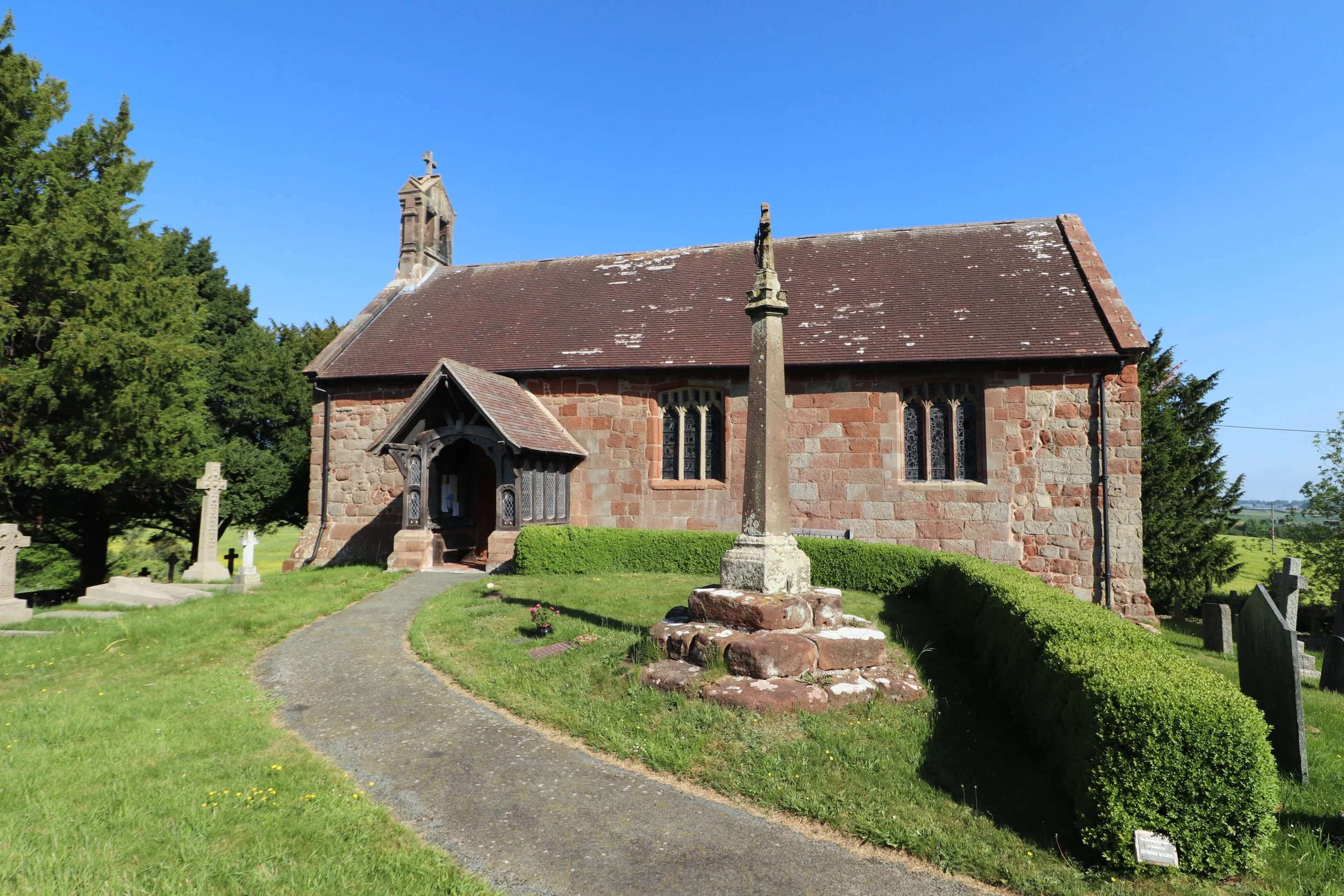
St. Martin's Church, Little Ness
This Chapel turned Church is situated in the bailey area of the original motte & bailey. Remains of it’s Norman origins can still be seen.
-
![]()
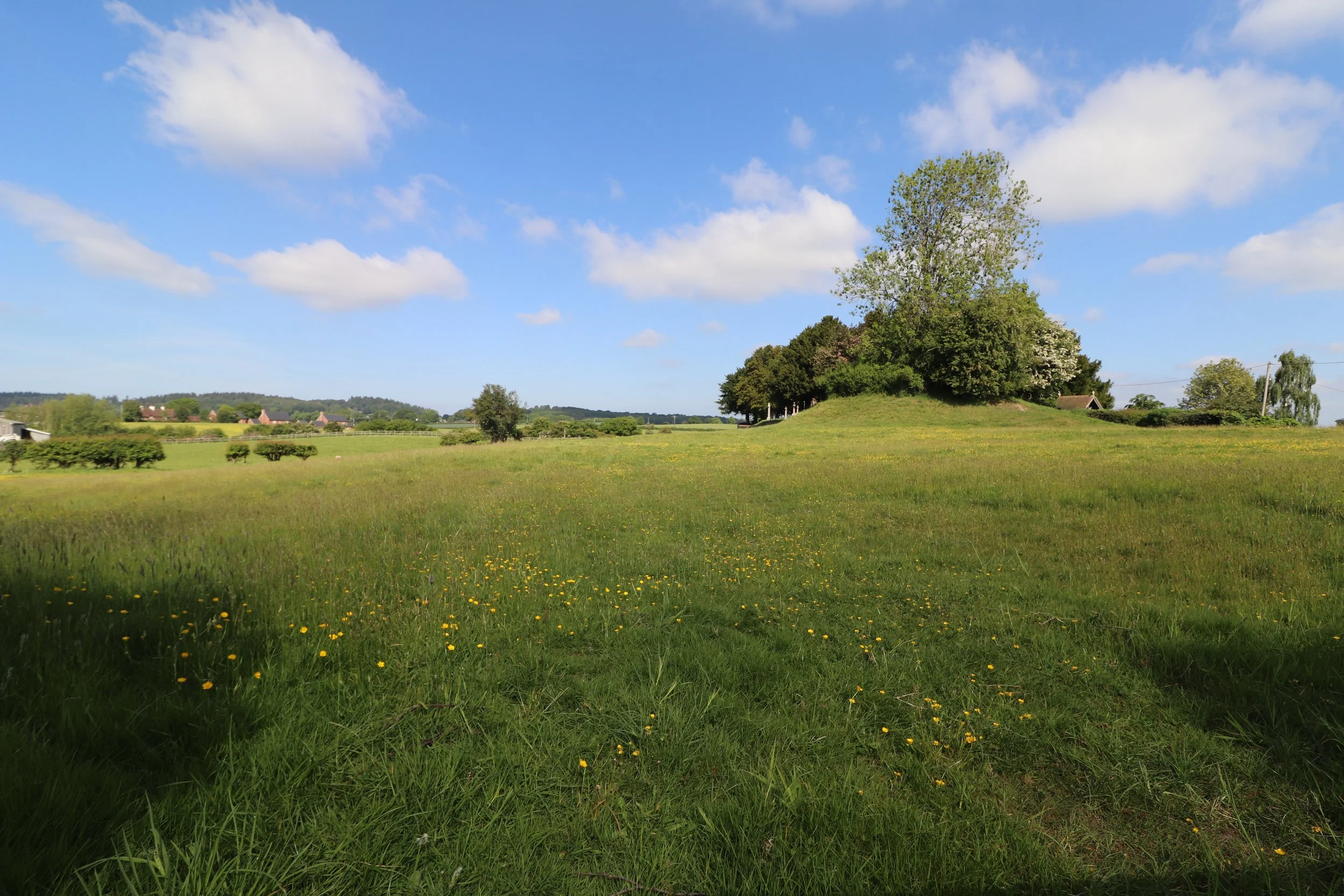
Little Ness Motte
The motte belonged to John le Strange I of Ness, Cheswardine, Myddle, and Hunstanton.
-
![]()
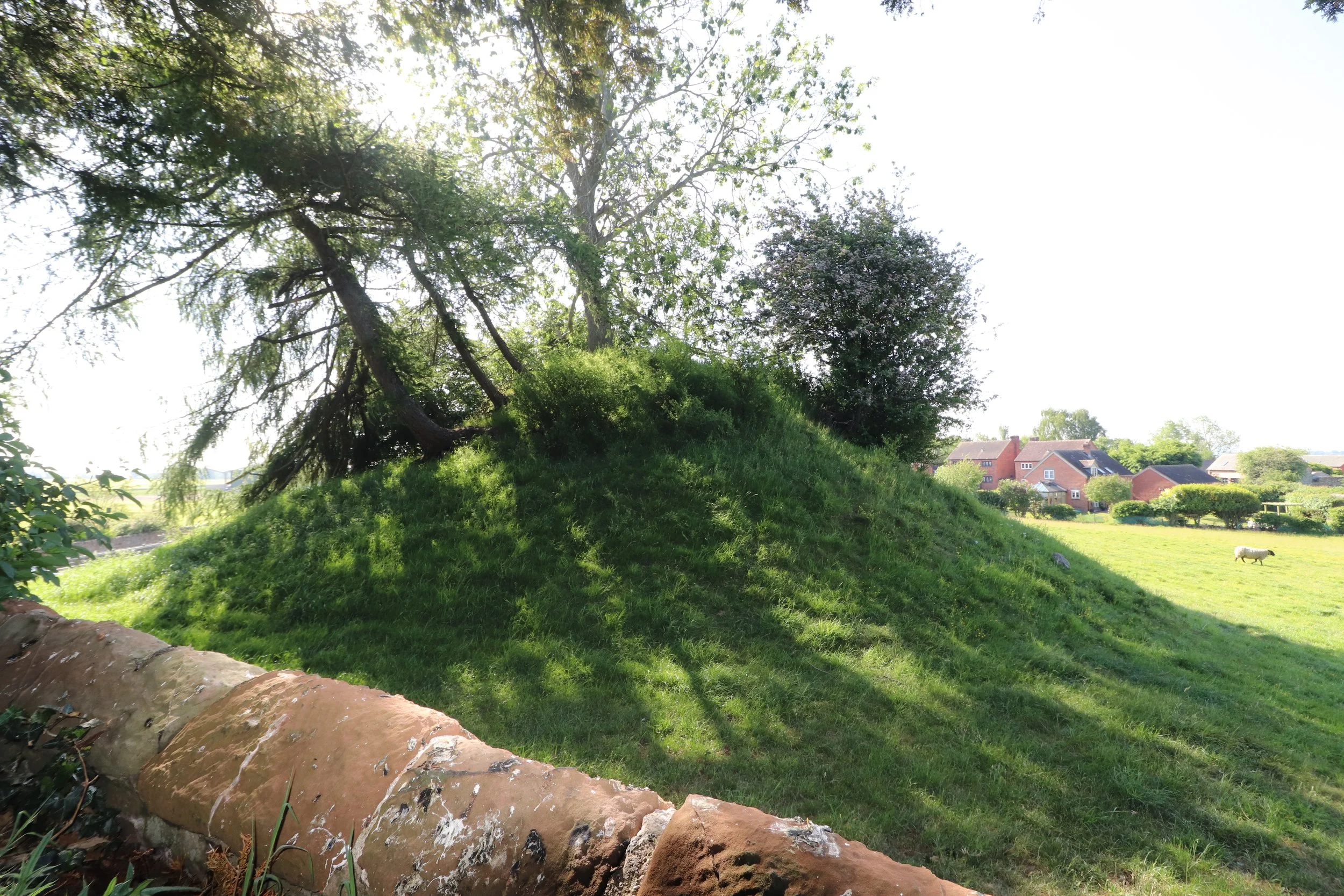
Little Ness Motte
The motte of John le Strange I from 1158.
-
![]()
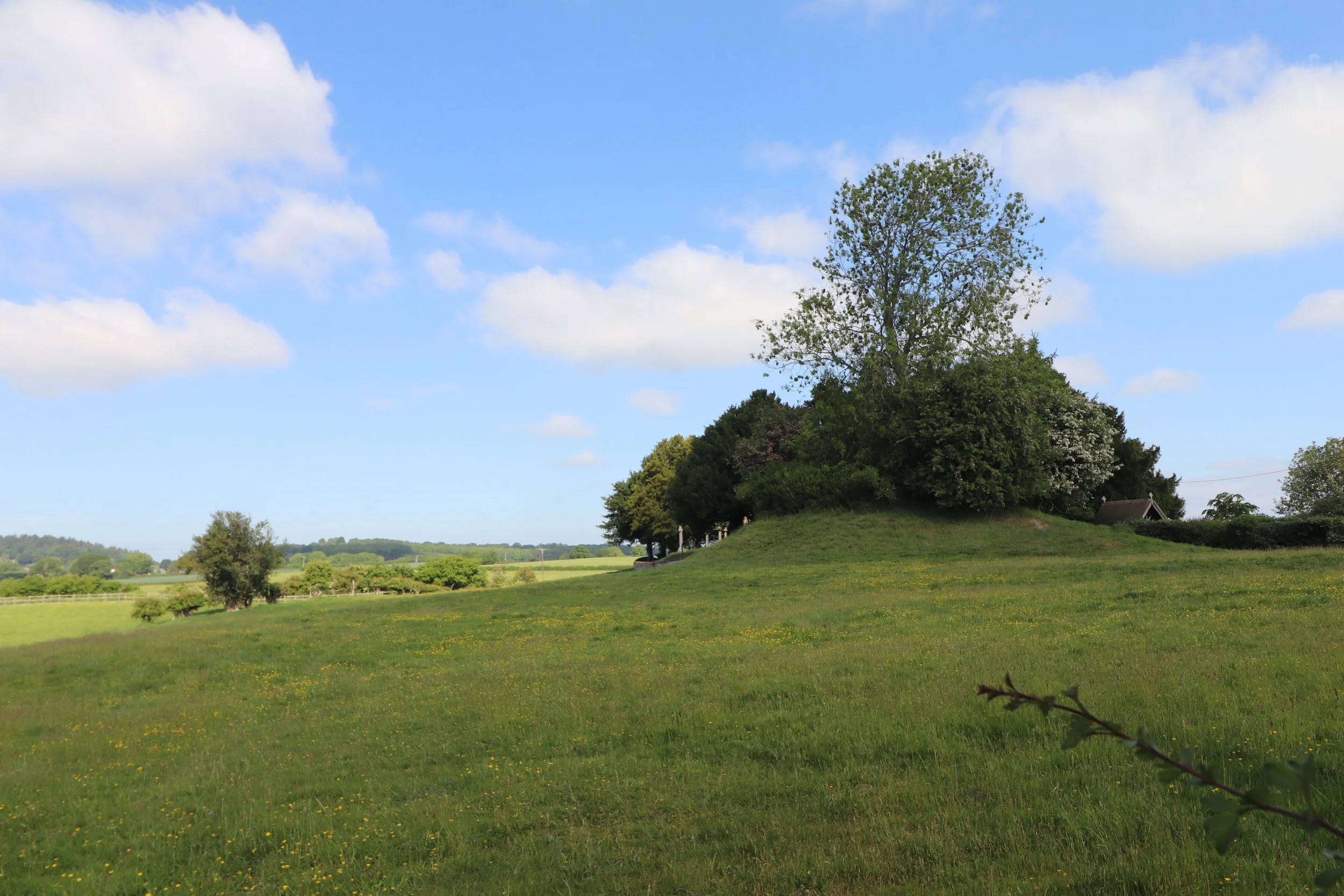
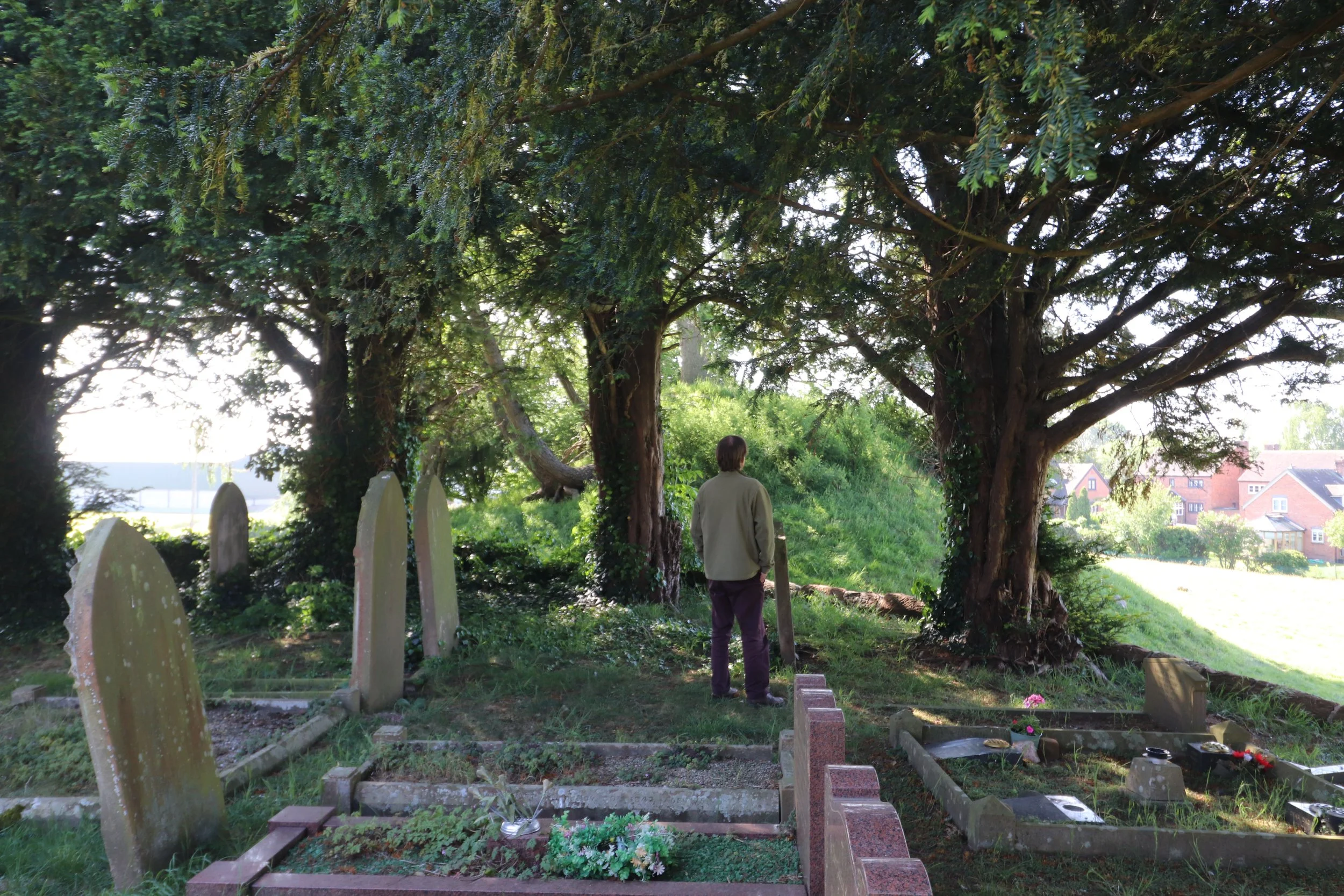
View Little Ness Motte (Churchyard)
25th G-Grandson of John le Strange I. View from the Graveyard, once a bailey!
-
![]()
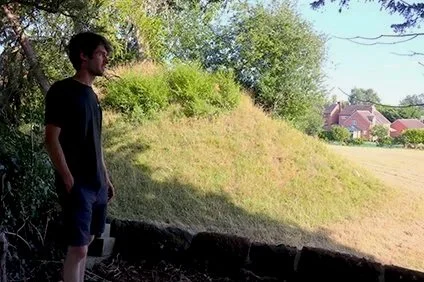
Ancestor by Little Ness Motte
26th G-Grandson of John le Strange I of Ness
the King made use of him when he invaded Wales, and the Shropshire Pipe Rolls show that in n56 and n57 the Welsh prince enjoyed possession of the manor of Ness. p.31-32
The Ness of John le Strange I
[1158-1439]
The story of John le Strange I begins to emerge from the shadows of early Norman England. The son of Roland le Strange of Hunstanton, had inherited his father’s Norfolk estates around 1135, carrying forward a legacy that was only just beginning to take shape.
His role in Shropshire was to hold and defend the strategic strongholds, serving under William fitz Alan I, who exercised authority in the region.
His parents had passed away by 1135—the year King Henry I died. John had managed to come through the long and chaotic years of King Stephen’s reign—better known as The Anarchy—a remarkable near twenty-year stretch when the kingdom tied itself in knots over the uncomfortable idea that a woman, Matilda, (Henry’s daughter) might actually wear the crown. While others picked sides, lost lands, or lost their heads, John, rather sensibly, survived it all.
During Henry I’s reign, Shropshire had experienced a deep and unsettling crisis—the rebellion of Robert de Bellême. The powerful but dangerously independent noble—had exposed just how fragile Royal control in the Marches of Shropshire could be. When in 1102, the King sent him into exile his power collapsed, and the Crown could no longer risk relying on over mighty lords whose ambitions threatened stability.
During King Stephen’s reign, about 1140, John le Strange of Hunstanton, emerged into the shifting landscape of the Marches, taking possession of lands at the established village of Ruyton along the western edge of Nesscliffe. It was an age of timber castles when authority was measured as much in strength as in title.
In these unsettled years, the future King Henry II—then still Duke of Normandy and a determined claimant to the throne—was steadily extending his influence across the region. When he finally secured the crown in 1154, the foundations of power in places like Ruyton and Ness had already begun to take shape.
In the years that followed, authority in the region was rebuilt more cautiously, through men like John le Strange, whose loyalty could be trusted. It was within this shifting landscape that the le Strange family emerged as replacements for Robert, appearing as part of a new generation of dependable retainers, entrusted with responsibility in a frontier marked by uncertainty.
Shropshire, poised on the restless edge of the Marches, was a land of immense importance and tension, ill-suited to distant court rule. Rather than tightening his grip, the King cast his authority outward, entrusting it to a web of loyal barons and their watchful castles. In this charged frontier world, men like the le Stranges were not merely subjects, but stewards of power—left to govern, defend, and shape their lands with a freedom born as much from necessity as from trust
The le Strange Family were key Marcher lords who supported him, and in 1158, Henry II granted John le Strange, the fief of Ness which included Little Ness, where a timber Keep once stood.
The modern parish of Ness is a remarkably direct survival of the original medieval Parish, and today houses a modern military base, the British Army Training camp, over quiet country roads, large vibrating helicopters often appear overhead.
The west boundary of Ruyton, with Baschurch to the North, and the River Severn on the south-east edge at Montford Bridge,
In records, Ness & Kinton (2 miles by car) are often found together in the le Strange Family holdings, and it is Little Ness which appears to have become John’s 2nd timber Keep (according to records), after Ruyton.
Although in the past, the rebel, Robert de Bellême, had dominated Shropshire, there is no evidence that the manor of Ness formed part of his estates; So we find Ness first appears securely in the possession of the le Strange family in the 12th century.
However, Ruyton before the le Stranges, likely did form part of the Robert’s Shrewsbury inheritance. So it seems that Ness was part of Henry II’s reorganised lands, as it only appears in medieval times as a distinct village associated with the le Stranges.
The village of Ness (later called Ness Strange) merged with the le Strange family of Knockin when the Knockin inheritance diverted to his son, John le Strange II.
During the reign of Edward I, John le Strange I’s great grandson, John le Strange V, was required to justify his claim to the manors of Ness and Kinton, and was summoned to court in 1291-2 to show the Charter from Henry II. He successfully did so by producing the charter, demonstrating that these estates had been in his family since the 12th century and held by his ancestor, 2nd G-Grandfather, John le Strange I since 1158.
John asserted extensive manorial rights in Ness was invariably it’s self governing. Compared with his castle of Myddle where he had exclusive hunting rights, his rights at Ness & Kinton were on par with a baronial Lord; Here he held exclusive hunting rights in addition to judicial privileges such as the right to try thieves (infangentheof) and other customary liberties held “from time immemorial”.
These claims were accepted, confirming Ness as a fully privileged feudal manor under hereditary control in 1158.
Plac. de Quo Warr. (Record Series), p. 679a., Ibid. p. 683a.
Built to defend England against Welsh incursions, the castles at Kinton, Ness, Ruyton, and Knockin, Melverley, and others, are attributed to the three brothers, John le Strange I, Hamon le Strange, and Guy le Strange, originally from Hunstanton.
The Motte & Bailey
Ness encompasses Nesscliff, Great Ness, and Little Ness. This latter, Little Ness is the site of an early medieval motte-and-bailey castle with a Church. Great Ness is the area said to have the foundations of the le Strange’s residential Manor House.
The Little Ness motte would most likely have supported a timber Keep structure (or stone) and the Church, dedicated to St. Martin, began as his small 12th century chapel, dating from the same period as the castle, probably around the beginning of his time there in 1158.
The remains of the Chapel are still visible in the Church, together with some of the original Norman details, and the mound on which his Castle Keep stood is beside it.
This medieval portion of St. Martin’s Church would have occupied the the bailey outside their residential Keep, a customary arrangement for a manorial site of that era.
The liberties attached to Ness place it well above the level of an ordinary manor, marking it instead as a semi-independent lordship in which the le Stranges exercised powers of justice, governance, and control normally reserved for the higher ranks of the nobility.
The Family had exclusive right to hunt certain animals (e.g. hares, rabbits, pheasants), the lord held his own manorial court to settle disputes, enforce local rules, carry out capital punishment (gallows for men, drowning for women)
The lord had high judicial authority (even life and death), goods that had been stolen and abandoned, or unclaimed, the lord could claim these, he had the right to try and execute a thief who was caught “red-handed” within the lands which meant he had the convenience of local justice being carried out without sending the case elsewhere. Ness was not an ordinary manor—it was more independent and did not dependence on local courts, it had it’s own judicial system, power over life and death, royal hunting privileges, rights over abandoned property making it a highly privileged manor with its own courts, judicial powers, and exemptions from normal local authorities.
On 26 August 1439, Richard le Strange, 7th Lord of Knockin (1381–1449), received royal permission to legally settle (entail) Ness and his other manors so they would pass to his children with his wife Elizabeth. His family survived.
OTHER LANDS
John I also had land in Norfolk, and Cheswardine authorith in 1158 while his brother hamon. He then inhertied Cheswardine in 1160 on the death of Hamon.
Its boundaries still reflectNatural geography (River Severn)
Historic neighbouring estates (Ruyton, Kinnerley, Baschurch)
NOTES
The original wooden structure was destroyed by Welsh forces, specifically under Llywelyn Fawr (Llywelyn the Great), in 1202 or 1212.
We cannot say exactly when John le Strange was born, but it is likely around 1112, in a time of uncertainty and shifting power.
When he died in 1178, he left behind more than land—he left the foundations of a lineage that would endure for centuries.
Near ‘Great Ness’ where it is said that the le Strange manor house once stood, is the Great Church of St. Andrew, a Grade I listed building. A couple of miles down the road stands the 12th Century le Strange Family holding at Little Ness.
This encompasses the site of an early medieval motte-and-bailey castle and it is situated in very close proximity to the church.
The motte would most likely have supported a timber structure rather than a stone keep. The Church, dedicated to St. Martin, began as a small chapel during that time, dating from the same period as the castle. The remains of the smaller 12th century Chapel are still visible in the Church, together with some of the original Norman details.
This medieval portion of St. Martin’s Church would have served as the le Strange family’s private chapel within the grounds of their residence, inside the bailey, a customary arrangement for a manorial site of that era.
A
John IV
on John iv’s death his estates were worth: Ness were worth fro; Knockin £20, and the W alcheria de Knockin £30. Ruyton and Middle were worth £30.p.167
John V
In the 20th of Edward I (1291-2) the Crown claimed from John le Strange the manors of Kinton and Ness; John answered that his ancestor John le Strange received them by grant from Henry II, and he produced the charter from that King. 2 He was then summoned to show how he claimed free warren and other liberties in his manors of Ness, Kinton, and Middle ; he replied that in Middle he only claimed free warren, but in the other manors he also claimed all other liberties, such as waifs, infangentheof, &c., from immemorial user, which was allowed. p.204
Jan 1311 on his Death: John VI the manors that belonged to him; Ness and Kynton were held by him in chief, by the service of one knight's fee, and eighteen acres of land were held of Meurik de la Benet, lord of Felton Botiler, rendering 3s. yearly. The manor of Knockin, with Melverley and Myddle p.265
Roger held Ness and Kinton: The Fine Rolls contain a further entry, dated November 2, I3II, of a sale for £300 to the King's yeoman Roger [sic] de Knockin of the wardship of two parts of the manors of Ness and Kynton late of John le Strange p.266
1316 3rd Lord of Knockin was certified as lord of the township of Ness le Estraunge, or Ness Magna p.324
By a deed dated at Knockin on March 21, 1322, John le Strange gave to Emeric Pauncefot, as feoffee in trust, two-thirds of his manor of Ness, with reversion of the other third, held in dower by Isolda, his mother. By a later deed Pauncefot granted the same to John le Strange and his wife Maud, to hold to them and their heirs.4 John followed the example of his ancestors in making eleemosynary gifts to Haughmond ; on July 19, 1322, he released to that abbey the vivary of Wilcote ; 5 and, on April 20, 1323, under the designation of ' Johannes Extraneus septimus de Knokyn, dominus de Nesse,' he granted to it the' alnetum' [alder wood] near the Hogh, with certain lands in Kynton. p.325
23 Aug 1382 Roger held: Holborn ; in Middlesex, the manor of Colham, and certain rents, with a fair and markets in the manor of Uxbridge; in Lincolnshire, the manor of Halton; in Bucks, two water-mills under one roof, in Denham on the bank of the Colne ; in Oxfordshire, the manors of Middleton and Bicester ; in Cambridgeshire, the manor of Middleton ; in Staffordshire, the manor of Shenston; and in Salop and the March of Wales, the manors of Ellesmere with its hamlets, of Strange Ness, of Kinton, and the castle of Knockin with its demesne.
p.432
In the years preceding his death he made grants to Haughmond Abbey. One included St.Mary’s Church.
Church of St. Martin: Historic England Scheduled Monument
Castle Motte: Historic England Scheduled Monument
Gatehouse Website (Philip Davis) Little Ness Castle Mound