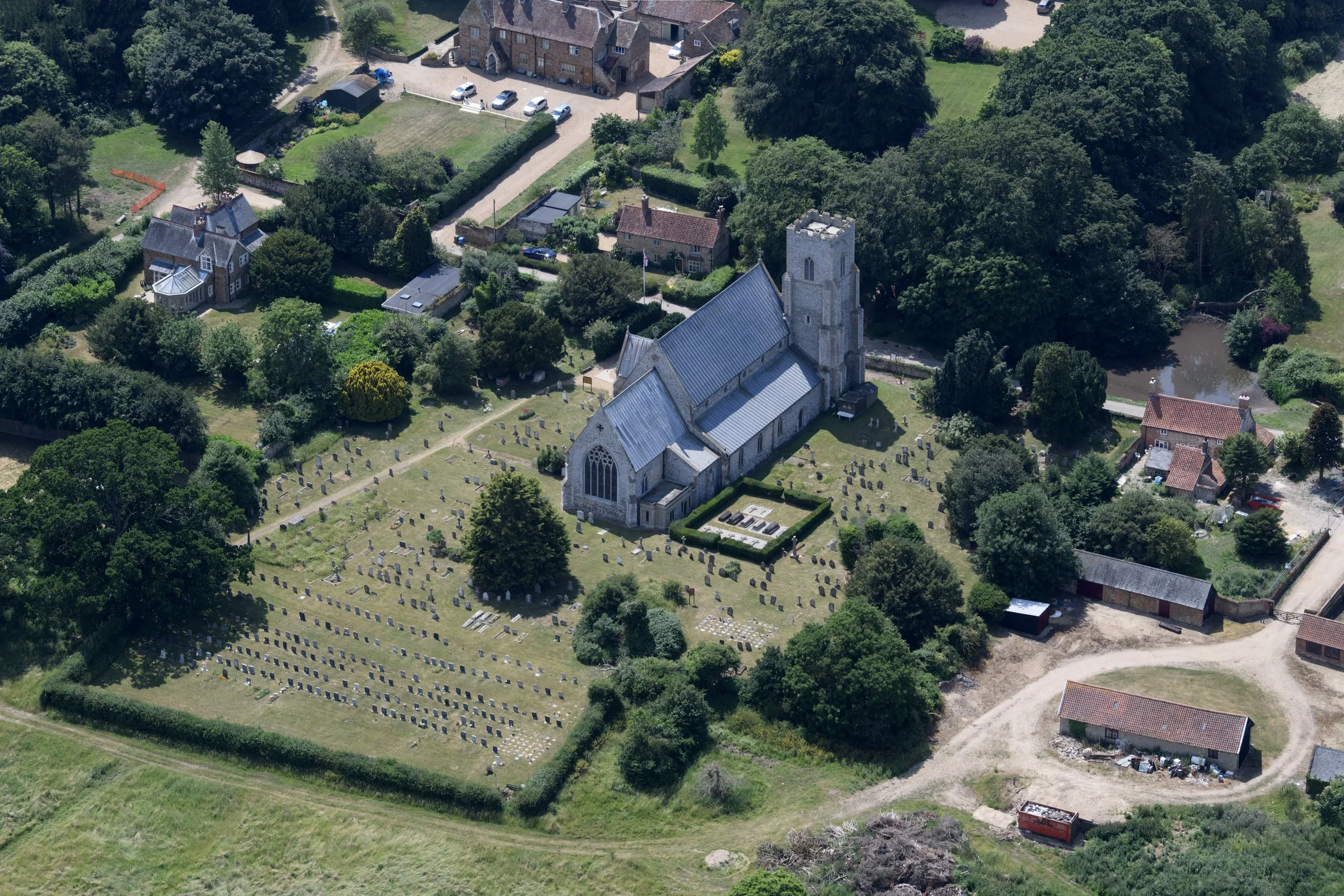
Church of St. Mary The Virgin, Old Hunstanton
CHURCH OF ST. MARY THE VIRGIN, OLD HUNSTANTON
The Rood Screen
Historical Background & Conservation by the le Stranges
The Hunstanton rood screen represents a significant example of late medieval ecclesiastical craftsmanship within Norfolk’s rich tradition of painted and carved screens. The surviving Apostle panels are of particular importance, both artistically and historically.
The screen was originally erected in the late fifteenth century beneath the chancel arch, where it likely remained until its removal during Henry Styleman le Strange’s restoration works to the nave in 1859–60. Although there had been an intention within the le Strange family to reinstate the screen when the chancel was restored in the early 1860s, insufficient funds prevented its inclusion in those works.
After Henry’s death (1862) the chancel renovations were completed. In approximately 1865, twelve painted panels depicting the Apostles were removed from the screen and sent by the Vicar to the South Kensington Museum for safekeeping and exhibition.
In 1879, Henry’s son and Heir, Charles le Strange, and others undertook a survey of surviving Norfolk rood screens, producing drawings and notes with a view to the possible restoration of the Hunstanton screen. Their proposals reflected prevailing nineteenth-century ecclesiological principles and included:
The removal of a later Jacobean upper section considered stylistically incongruous, to be replaced with lighter Gothic detailing consistent with fifteenth-century precedents.
The reinstatement of a central arch more in keeping with the original medieval design.
The removal of later brown overpaint, or alternatively the careful reinstatement of the screen’s original polychromy, evidence of which remained visible beneath later coatings.
The protection of the Apostle panels under glass, without overpainting or intrusive restoration.
The installation of a light but secure gate to protect the chancel and vestry in a Church that was open daily to the public.
The Apostle panels were regarded as works of considerable artistic merit and were attributed at the time to the School of Holbein. While this attribution would require modern scholarly reassessment, it reflects the high esteem in which the paintings were held.
In 1890 after approx. nine years the panels were returned from the Museum having been kept for so longer due to lack of space at Hunstanton Church. On their return, the main structural body of the screen was placed against the north-west wall of the north aisle and panels were briefly displayed within the St. Mary’s Church, however they were subsequently placed in secure storage in the vestry to protect them from damage. Other carved and painted fragments were stored separately at the Vicarage of Charles le Strange’s sister, Jamesina (d.1912) and her husband Rev. Adolphus Waller (now referred to as the Old Vicarage located nearby).
It was proposed that additional decorative panels should depict Angels, reflecting the theological symbolism of the chancel as a space associated with Praise, complementing the nave’s association with Prayer. The proposed designs were to be undertaken by a cousin, Margaret Stewart, in burnt-wood drawings on panels inspired by the Barton Turf Rood Screen.