
Hunstanton Hall ancestral home
A 900+ YR HISTORY
From Castles in Shropshire to Hunstanton Hall, the moated ancestral home of the le Strange family is set within the parkland of the Norfolk Estate.
Land here has been in the Family’s possession since—at least—1086, and despite what’s said on the website of St. Mary’s Church, the succession of Heirs continues unbroken, to this very day.
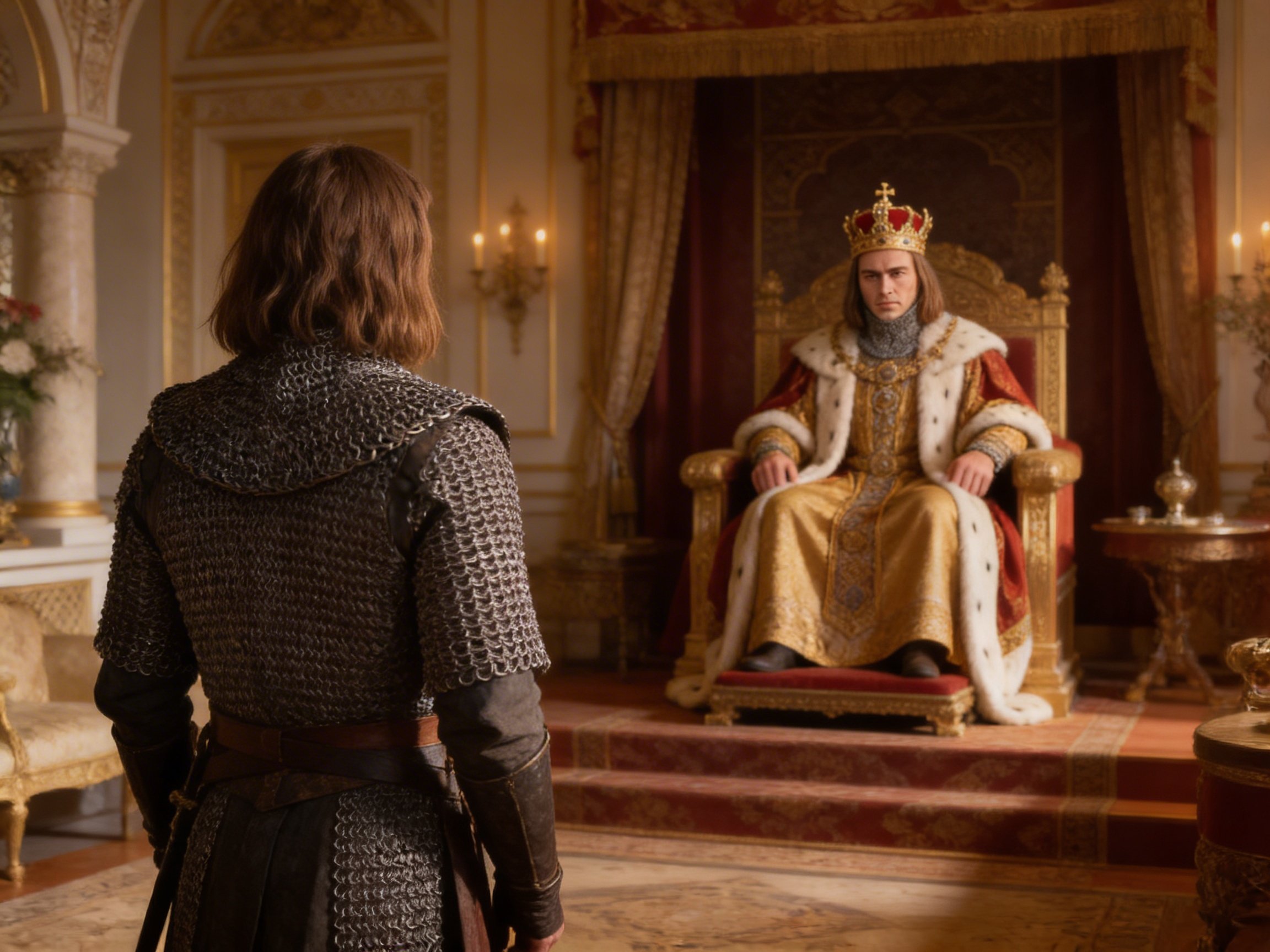
The Hall still stands within its historic parklands having been sold out of the Family in 1949.
Between the 1960s-1990s the Family retained a small foothold in the West Wing, when as children, my generation was among the last to enjoy spending time visiting and delighting in the West Wing & Gardens.
Few families had sustained such continuity over the centuries from the time it was built to it’s sale. Whether through prudence, resilience, or circumstance, the le Stranges endured where many others didn’t.
With the exception of a couple of heiresses, the family had plenty of male heirs. Their coastal home at Hunstanton, which remained in the family may have helped in practical ways. The location provided fresh seafood, fertile land for farming, and a steady supply of clean spring water from the chalk aquifer in the parkland, offering both food and long-term stability.
Over time, the lineage has extended to 32 generations (as of 2025), each of the 36 Heirs within those 32 generations being a grandchild of Ralph of Hunstanton, in 1086 (see below lineage).
Whether there was a house in those days or not, the Estate was inherited by Ralph of Hunstanton’s daughter, Matilda. It was through her marriage to Roland le Strange around 1100 when the surname, le Strange, was introduced and it has endured ever since.
Another generation later, by 1138, their son, John le Strange I had assumed the Norfolk seat to later settle in Shropshire on military service to Henry II of England.
THE PROGENITOR
Ralph Herluin (of Hunstanton) + Helewisa
|
Matilda + Roland le Strange c.1100
|
John le Strange I d.1178
John inherited Hunstanton and as a Marcher Lord established an additional base in Shropshire in the 1150’s immediately upon King Henry’s accession to England.
Throughout their formative years as Marcher Lords, the Family held their position at Hunstanton under the Earls of Arundel, and the farmland continued to be utilised and provide for them.
For past centuries, the Family’s reputation had rested on steadfast loyalty to Crown and country—even during the turbulent reigns of King John and Henry VIII. Some male heirs distinguished themselves in military or courtly service, occasionally at great personal cost; others maintained a quieter presence.
The le Stranges of Hunstanton Hall were well known in Court circles. Two notable family members served as Esquires of the Body to Henry VII of England and Henry VIII—an intimate and trusted role within the monarch’s private household, limited to a select few men with access to the King’s personal apartments.
The best known was Sir Thomas le Strange, Esquire of the Body to Henry VIII, whose likeness was drawn by Hans Holbein the Younger and is associated with the Royal Collection at Windsor Castle. He succeeded his uncle, Sir Roger le Strange (d. 1509), who had held the same office under Henry VII. Sir Roger’s tomb, distinguished by its monumental brass, remains inside the Church of St Mary the Virgin, Old Hunstanton, just a short distance from the Hall.
The age of the Hall is debatable. The building itself is a tapestry of centuries, worn in like an old cloak. Its striking gatehouse dates from the 15th century, and architectural historians have described the structure as possessing a 14th-century core.
Yet documentary evidence suggests that occupation of the residential site may be earlier still. An original family document, dated by the historian Robert Eyton to circa 1275, remained preserved on the premises for centuries in the Muniment Room. It was customary for such deeds to remain at the property to which they related, and vellum documents—remarkably durable—can survive for many hundreds of years when properly stored. This evidence implies that a substantial residence was likely established on the site well before the 14th century.
Did the first vellum documents outlast an earlier residence in the form of a timber manor house? Do earlier foundations remain buried beneath the present structure? Without invasive archaeological investigation, such questions cannot be conclusively answered.
What is known is that Ralph Herluin of Hunstanton—the family’s recorded forebear in the Domesday Book—held two lands at Hunstanton in 1086, one of which was among his most valuable of his possessions in Norfolk. His grandson, John le Strange I of Knockin, referred to him as “Ralph de Hunstanton,” emphasising the enduring association between the family and the place.
Given the significance and value of the holding, it would seem unlikely that such a Norman lord such as Ralph Herluin and Roland le Strange, did not maintain a private residence there. Whether in stone or timber, modest or fortified, an earlier dwelling likely stood on or near the present site—its physical traces perhaps hidden, but its legacy unmistakable.
In times of peace, successive heirs turned to estate management, agriculture, clerical service, and countryside pursuits. In the 19th century, Henry Styleman le Strange—artist, architect, and entrepreneur—transformed part of his land into the Victorian seaside resort of Hunstanton. A statue erected in 2017 now overlooks the town he helped create.
His name came from 1762, when his Great-Grandmother aged 71 year old Armine le Strange (d. 1768) became Heiress. This has sometimes been mistakenly been put down to a break in the bloodline, due to her married ‘Styleman’ name. It was not. The descent remained direct, the le Strange name alone evolving through natural inheritance.
After the sale of Hunstanton Hall to an American owner, the house was divided into separate wings for practicality and was resold in the mid-1950s.Between 1086 and 1949, the rhythm of estate life continued largely uninterrupted even when the peripatetic Lord was away in Shropshire. By the late 19th century, however, governance began to shift. The Local Government Act of 1894 transferred increasing authority to elected councils, while 20th-century taxation—particularly under the Lloyd George reforms—placed heavy financial burdens on large landowners.
After hundreds of years of continuous occupation, Hunstanton Hall was sold in 1949 by Bernard le Strange, the 33rd heir and 25th great-grandson of Ralph of Hunstanton. The sale, was driven largely by taxation pressures threatening the survival of the wider estate. Bernard, who had served in both World Wars and married later in life, sought to preserve what he could of the family’s land holdings.
Following the sale, Bernard retired to Jersey, while his wife, Glwadys, Marchioness of Townshend, settled in London. Though the ancestral home passed from the family, the le Stranges retained ownership of much of the surrounding estate.
Development of Hunstanton accelerated. A few years prior to the sale in 1937, and again in 1949, residential plots were sold, forming what became the Cliff Estate, with roads named after family members—Bernard Crescent, Austin Street, Astley and Hastings Crescent, Boston Square, and others. From the 1960s to the 1990s, the family managed to maintain a foothold in the West Wing of the Hall, until mounting repair costs—particularly to the lead roof—made retention impractical.
Though the Hall itself was lost, the estate endures. The sale marked not an end, but a transformation—another chapter in a history shaped by adaptation, continuity, and an enduring sense of stewardship.
-
The Hall kitchen gardens with red and white roses which they grew reminiscent of the red and white cliffs and coat of arms colours.

-
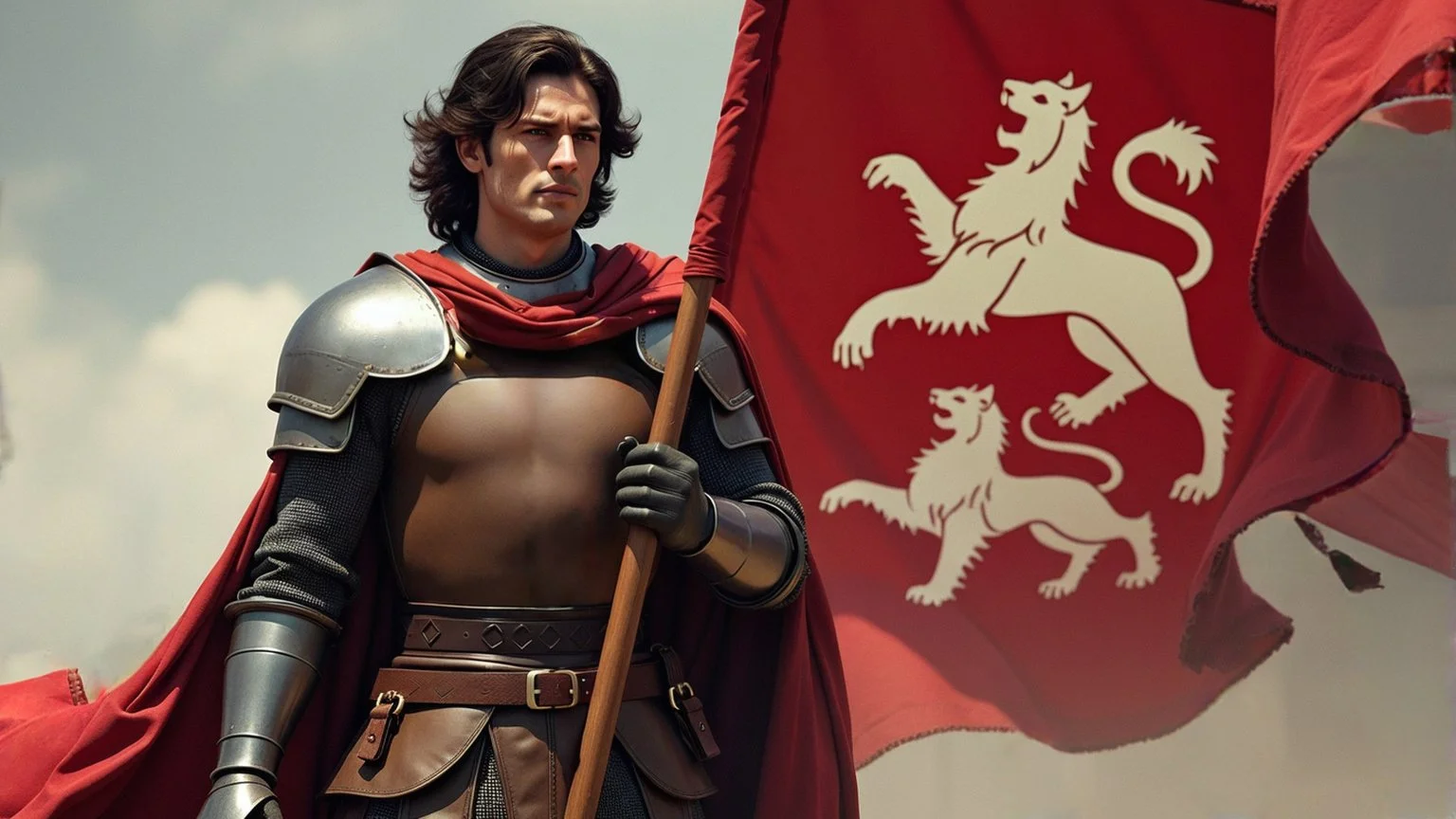
Image depicting a Marcher Lord carrying the le Strange Banner
-
A photo by kind permission of Julia K. Hill illustrates the unique sign post with the le Strange coat of arms and Lord High Admiral of the Wash with spear.
