Le Strange Family Burial Locations
GRADE I LISTED
THE CHURCH OF ST. MARY THE VIRGIN
OLD HUNSTANTON

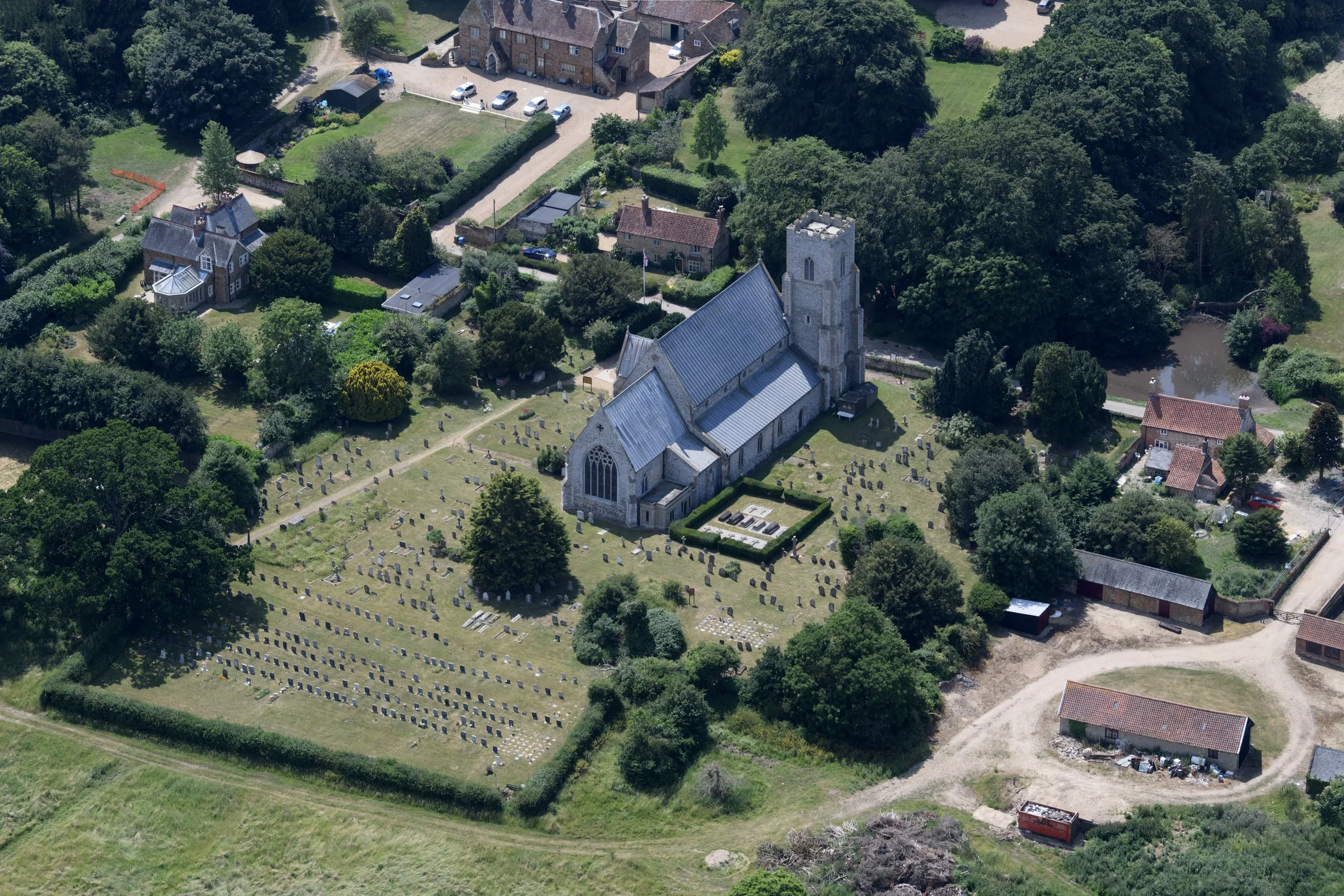
A notable collection of le Strange family burials, tombs and monuments can be found at St Mary the Virgin Church, Old Hunstanton dating back to c. 14th Century.
Within St Mary the Virgin Church, Old Hunstanton survive several early relics of the original building, including an unnamed stone coffin lid believed to date from the 11th or 12th century. By 1229 the Church was already consecrated with a cemetary. [ref:Haughmond Charter 620]. Still situated within the Family boundaries, the Church may well contain remains of prominent early le Strange patrons dating from the 10th to 12th centuries, however there is no evidence for this.
The piscina and the Norman font—still in place—will have witnessed countless gatherings, Christenings, and Marriages, from the Norman period to the present day. Please visit the site for further information. Among these ancient monuments is an unnamed ogee-arched tomb recess at the High Altar, traditionally associated with the 14th Century le Strange family - possibly being the Tomb of Hamon le Strange (d.1317). This is an Honourable position befitting of the Knight who rescued the Church abt. 1310 when renovations to this Norman Church began. Hamon is the brother of Eubulo le Strange, the 2nd husband of Alice, the Countess of Lincoln whose life story is one of drama.
St. Mary’s was a Rectory, being controlled by Haughmond Abbey in Shropshire. Between 1086 and 1172 the Church became associated with the le Stranges. In 1086, it was recorded as a being a “church without land,” on the property of John, nephew son of Waleran (son of) Ralph, suggesting it was a private manorial chapel not yet belonging to the le Stranges. At the same time, the le Strange progenitor, Ralph of Hunstanton (Ralph son of Herluin) held two lands in Hunstanton one of which was his most valuable portion. By 1172 the chapel has already been promoted into a Church. One Grandson, John le Strange I, a Knight and Canon, granted the Church of St. Mary, Old Hunstanton, to Haughmond Abbey, Shropshire, highlighting that within this approx. 86 year timespan the le Strange associations with Hunstanton Church began.
Today, it is still Ralph’s grandson’s who continue to maintain the historic association with the Church at Old Hunstanton. It has been said that the le Stranges are the Greatest family never to have received an Earldom!
The le Strange Family history is older than the 14th Century Ogee Tomb, and yet some of their earliest medieval tombs and burials remain a mystery.
Between 1086 and 1135, the Hunstanton based Family burials are a mystery. By 1150’s, the 3rd generation were stationed 200 miles westward, in the Shropshire Marches. It was this generation who is first associated with St. Mary’s, Old Hunstanton, by 1172. In many ways, this provides a plausible explanation for a number of those early burials which may not lie in Norfolk, but in Shropshire—reflecting the medieval Family’s relocation, and while Hunstanton with it’s Church remained one of their strongholds, Haughmond Abbey in Shropshire also became the focus of their dedicated support through private financing.
HAUGHMOND ABBEY, SHROPSHIRE
and the Earlier Medieval le Strange Family from 1138
At the outset of the reign of Henry II of England, the early le Strange knights as brothers; John, Hamo, Guy, & Ralph, moved to Shropshire. This was the frontier on the Welsh border where they served as Marcher Lords. During this period of expansion, alliances were forged between Hunstanton Church and Haughmond Abbey - which overlooks the fields of the Battle of Shrewsbury.
It is widely believed that some of the earliest generations of the family may have been buried at Haughmond Abbey, reflecting both their presence and patronage of religious foundations in the region.
It began not long after the Abbey was founded (around 1120–1130) by William fitz Alan. During it’s formative years, before 1138, William had John as a witness to his grants of land to the Abbey.
John le Strange I was the son of Roland le Strange. He was primarily a Knight, and Canon, and in 1172 granted advowson of St Mary’s, Hunstanton, to the Abbey. His subsequent transfers, placed the Hunstanton Church under the oversight of the Shropshire Abbey allowing both to remain supported. 4 years later, in 1176, John’s grant received royal approval, during the visit of Henry II at Shrewsbury.
The scale of the Family’s patronage, and monastic precedence, makes the Family’s early burials at the Abbey highly probable. However, it must be said that there are no direct records of le Strange burials as the roll of Haughmond has not survived.
In that same year of 1172, John made additional grants of land to Haughmond Abbey, followed by a final gift in 1177, shortly before his death about 1178 - early 1179. Such benefactions would, by monastic custom, have secured burial rights within the church of the Abbey—an honour befitting a man of his rank.
Destruction of Haughmond Abbey
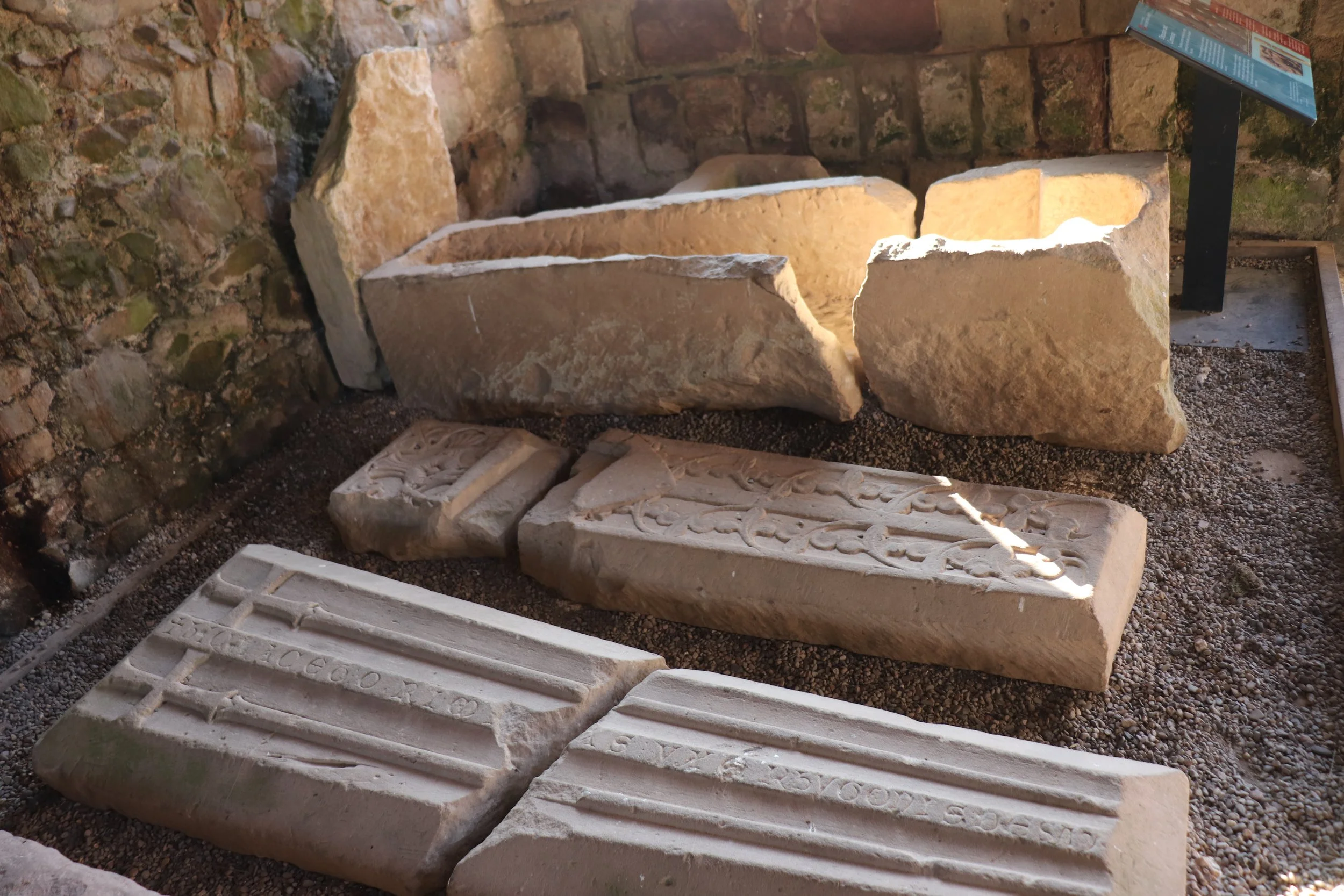
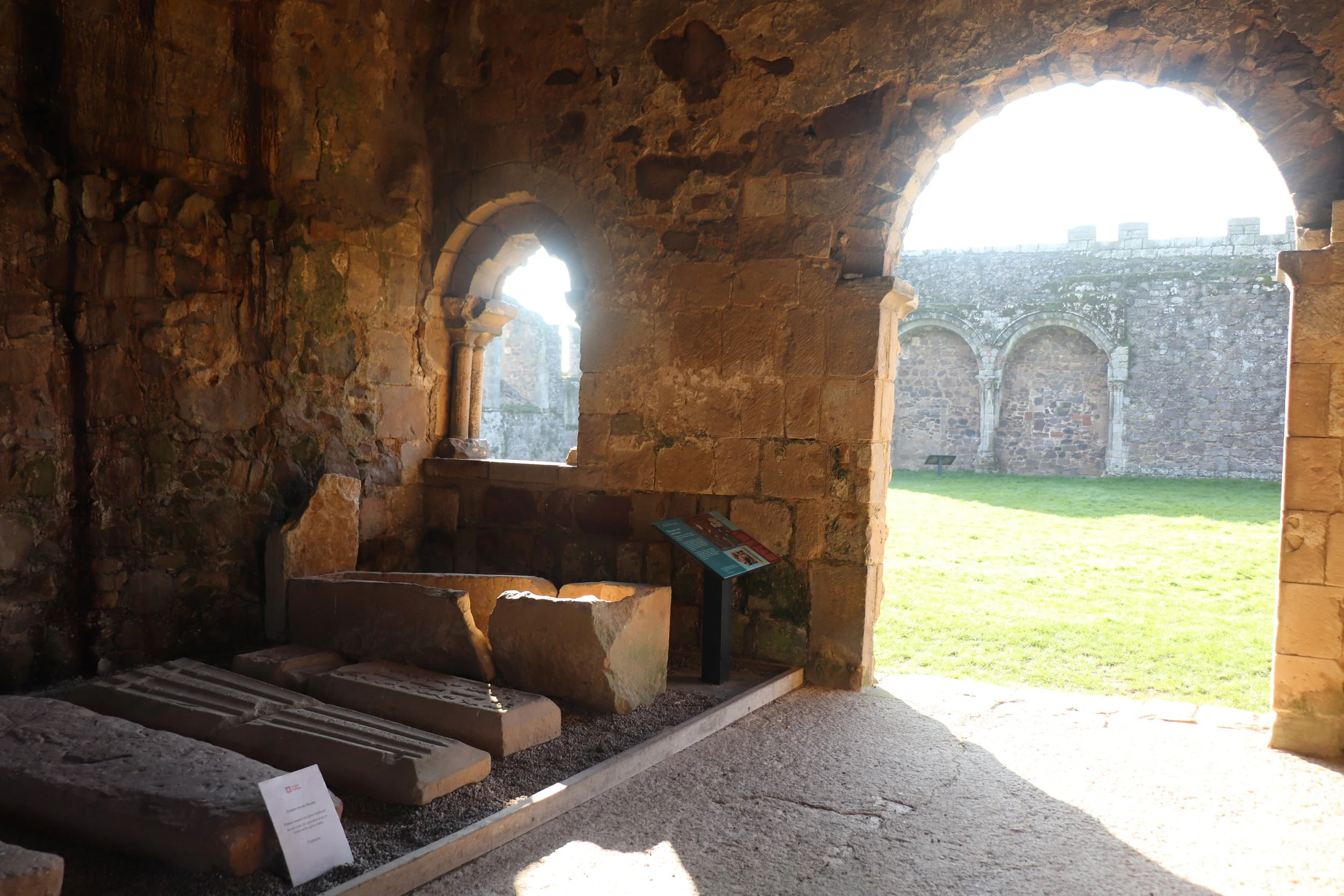
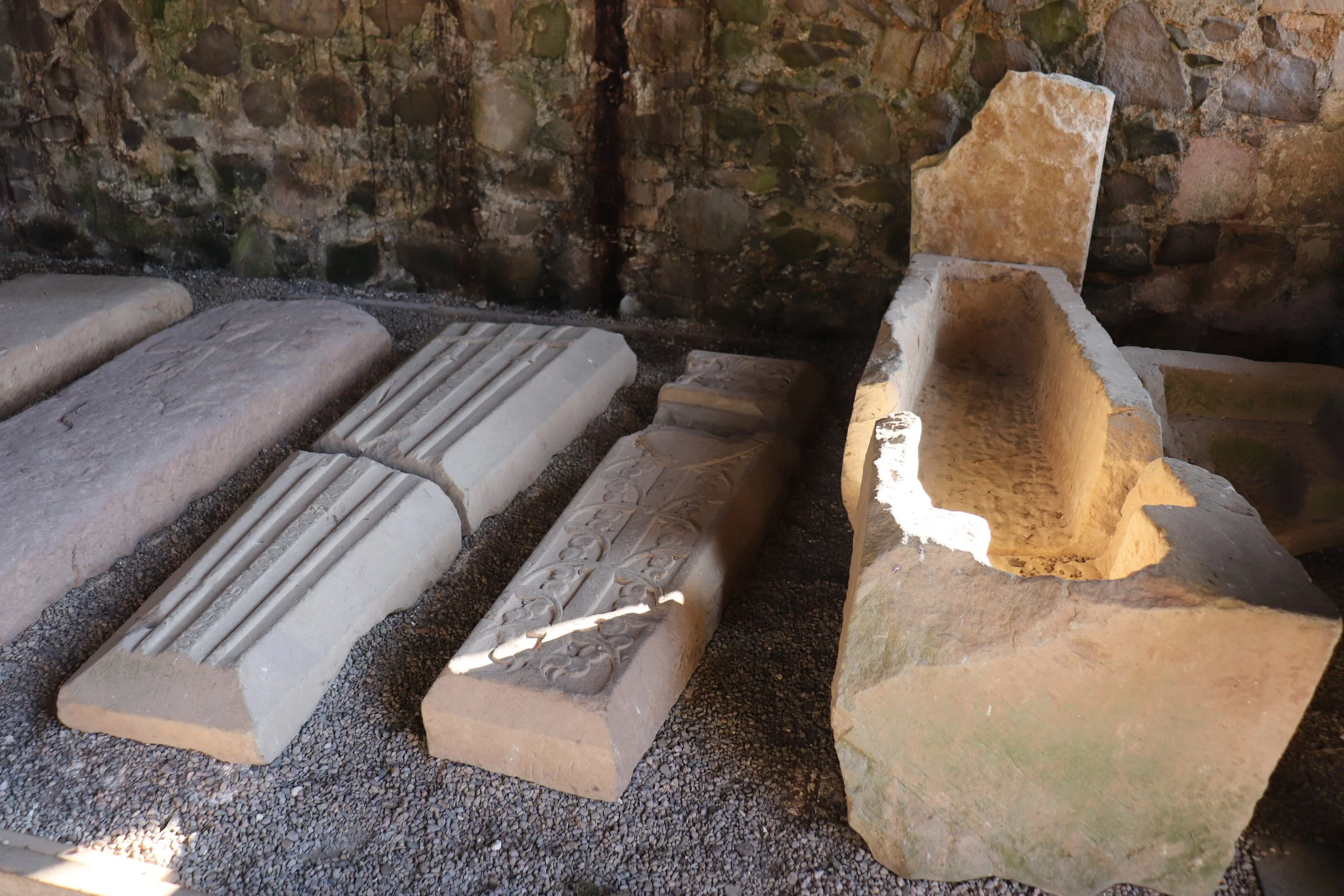
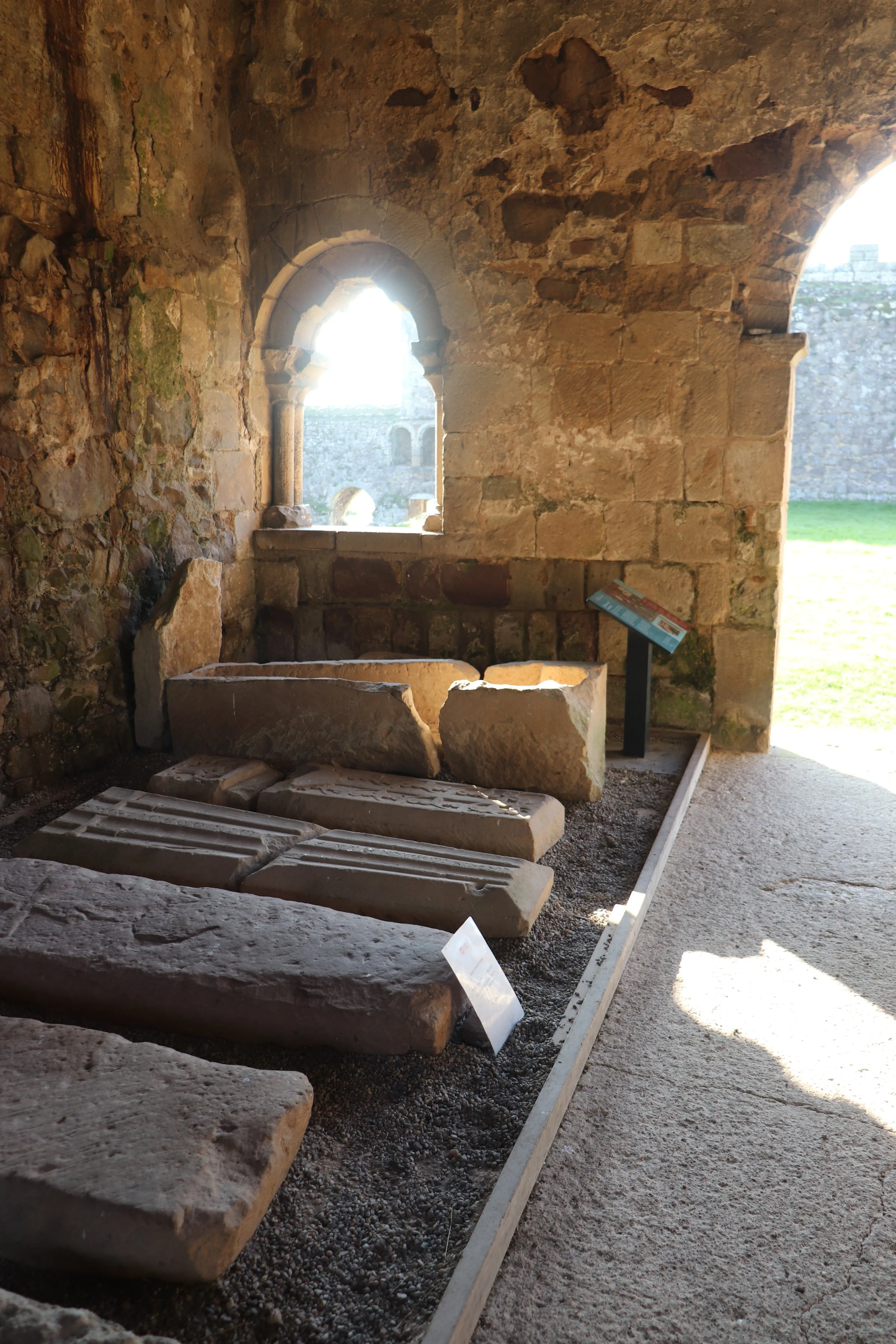
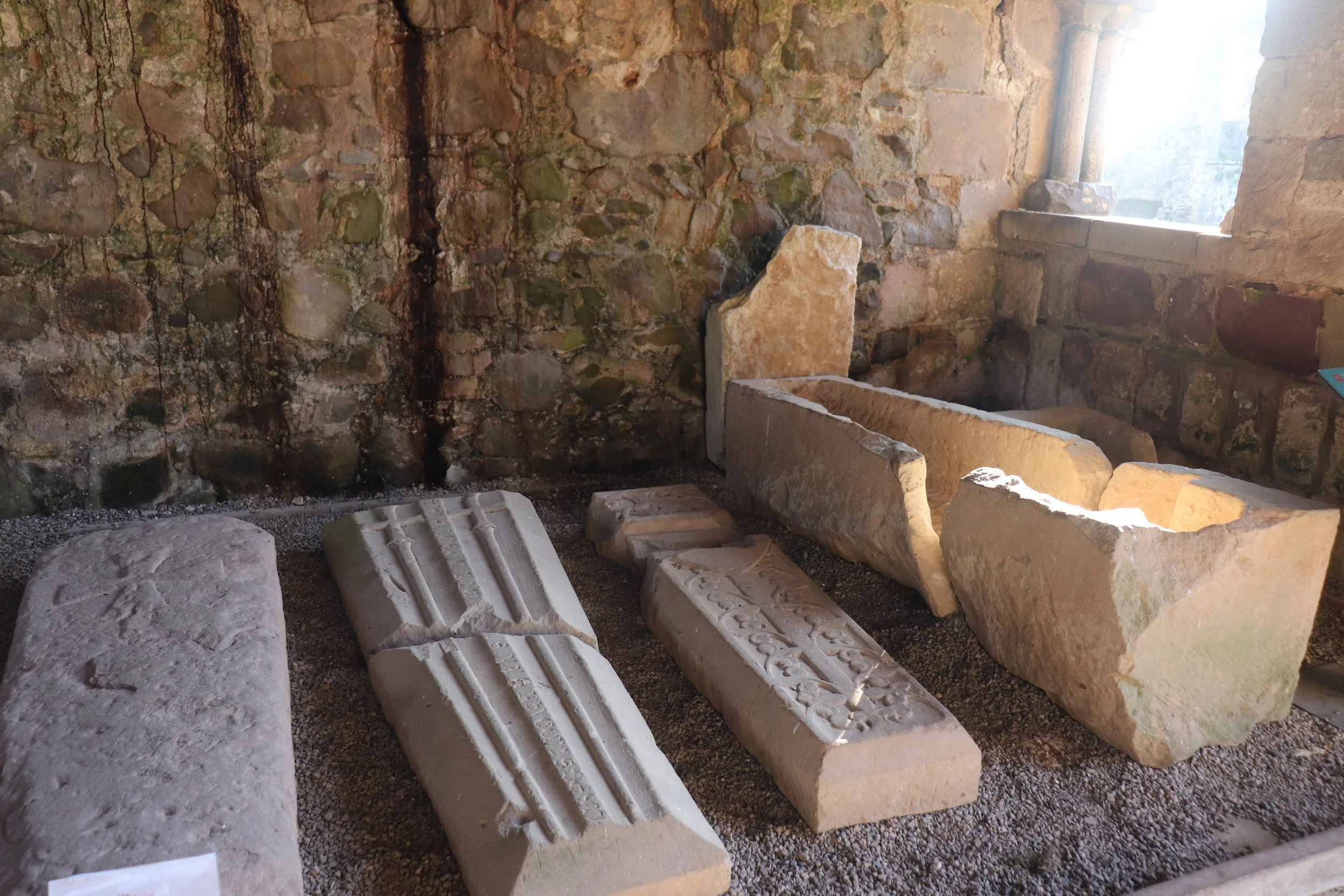
The Abbey was destroyed by Henry VIII, in the Dissolution of the Monasteries. One can only imagine it’s splendour. It was during this time when the Hunstanton relation, Sir Thomas le Strange of Hunstanton Hall, acted as Esquire to the Body of Henry VIII. To be aware of such demolitions of any Family tombs was possibly devastating to the le Stranges residing at Hunstanton Hall. Sadly, the Abbey fell to ruin, leaving a number of unidentified tombs (see below images) now placed in ruins of the Chapter House (see images below). As major patrons and benefactors, successive generations of the le Strange family would have secured burial rights there. John IV le Strange of Knockin (great-grandson of John I), further demonstrated the family’s active patronage in the later 13th century while serving as patron of Hunstanton. The Family’s connections were further reinforced through his marriage, which allied them with the Earls of Arundel and the Fitz Alan founders.
Although Shrewsbury itself possessed the more prestigious Shrewsbury Abbey—often favoured by the highest nobility—Haughmond Abbey offered a distinguished yet fitting burial place for a leading Marcher family such as the le Stranges.
UNIDENTIFIED FAMILY TOMBS
After 1310, the junior branch at Hunstanton undertook significant rebuilding works at St Mary’s. Yet there exists a gap between 1506 and 1643 (137 year gap) in the Family burials. These include Sir Thomas le Strange, Esq. to the Body Henry VIII, and died 16 January 1545. His precise place of death and burial location have not yet been established from contemporary evidence. Later sources state that he was buried at Hunstanton, while an even later account places him on the north side of the chancel; the original authority for these statements still needs to be identified.
The 137 year period spans two major upheavals: the Reformation under Henry VIII, when Protestant practice replaced Catholic tradition and burial customs became markedly simpler, and the turmoil of the English Civil War in the 1640s, when destruction of church fabric and memorials was widespread. However, had they chosen to be buried in unnamed graves this would renounce their forebears and background heritage which - in my view - would be highly unlikley.
Substantial floor renovations in the 19th century further disturbed earlier layers. However at least three generations of burials appear to be non-existent—leaving historians to speculate whether they were lost to religious change, civil conflict, or later reconstruction.
LATER FAMILY BURIALS
Henry Styleman le Strange (d.1862) had outlined ambitions to build a family burial vault, however, due to his early demise remained unfulfilled, so the later members of the le Strange Family are buried in the Family plot outside instead.