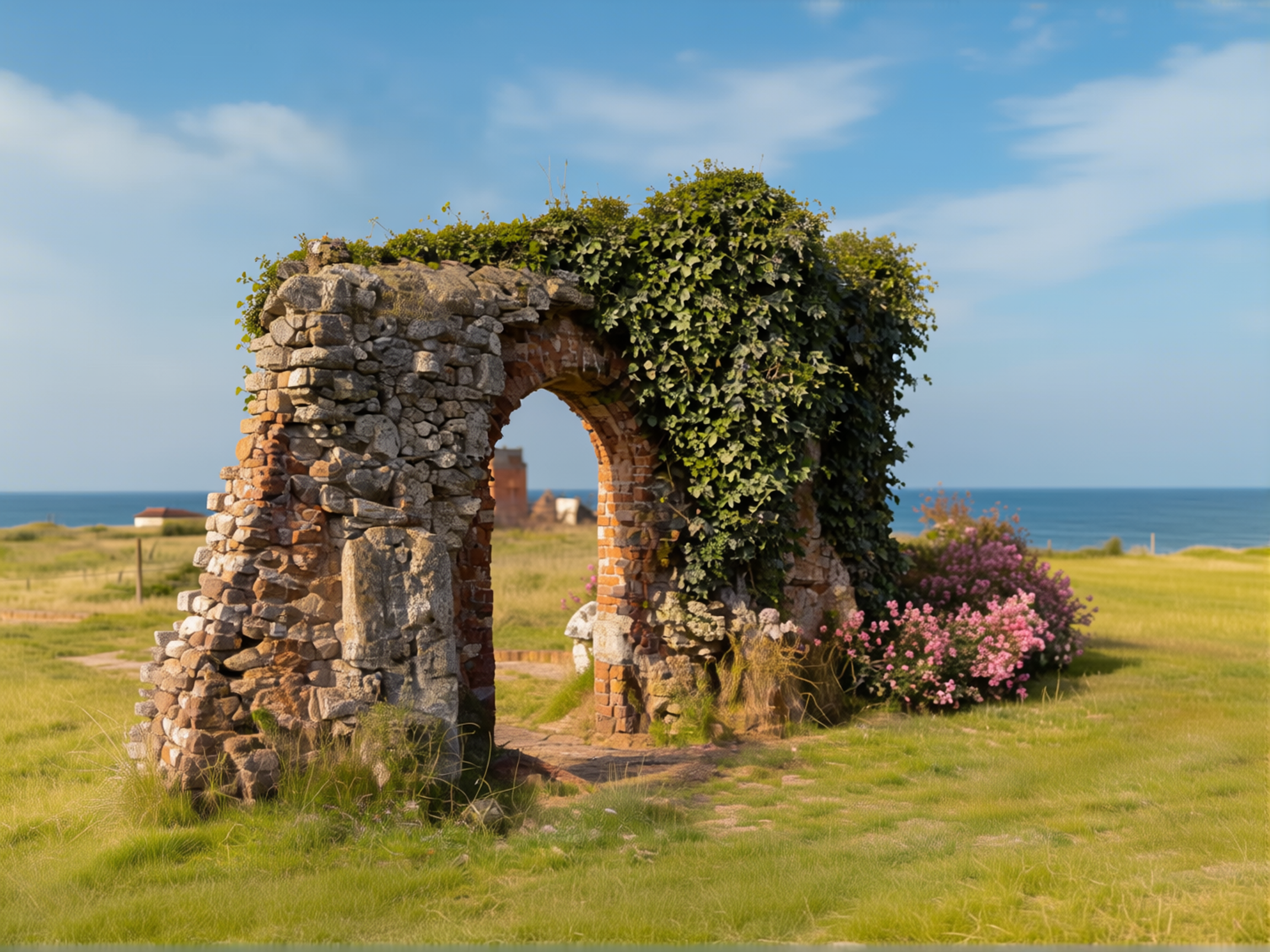
St. Edmund’s Ruin, Hunstanton
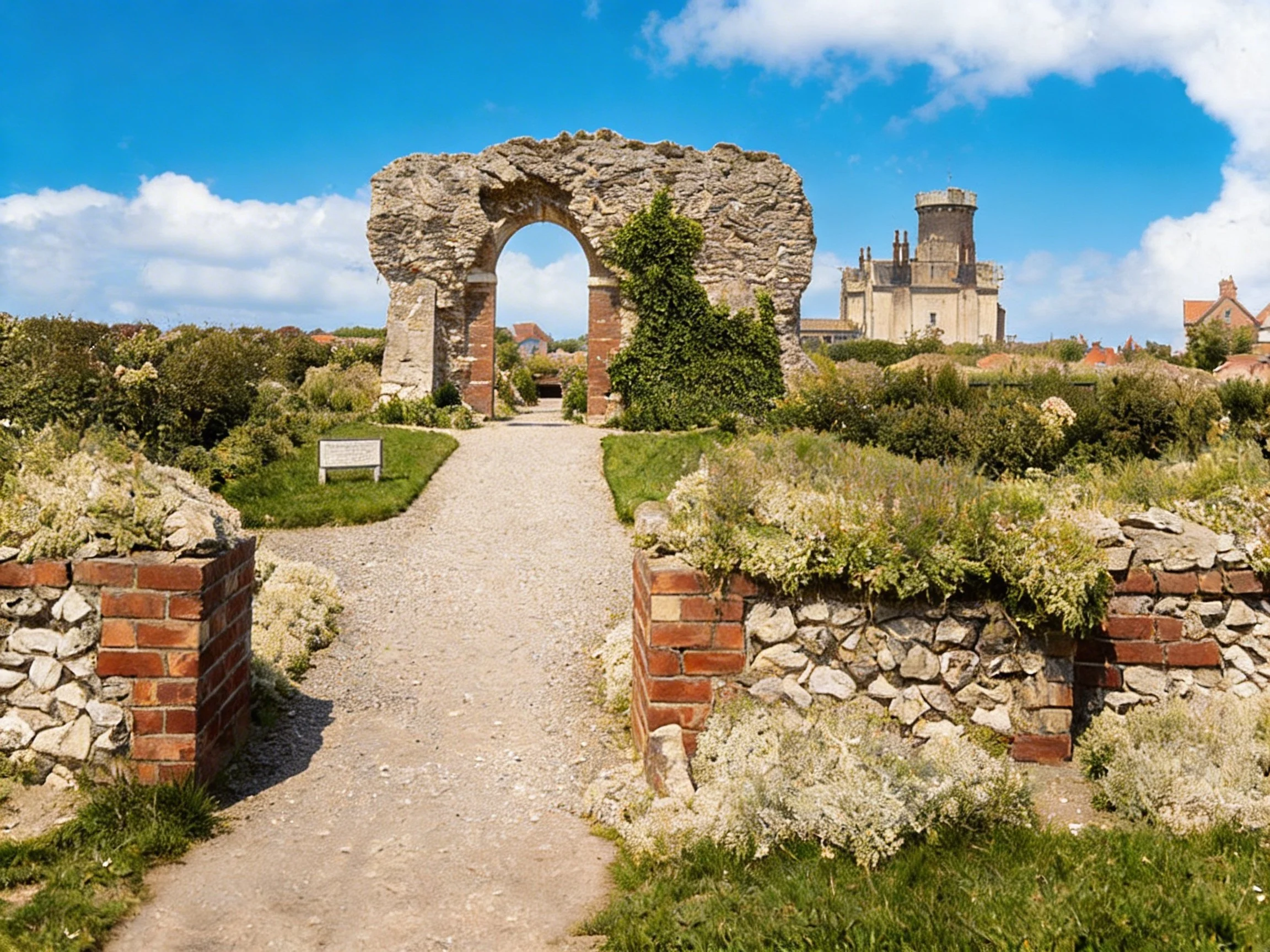
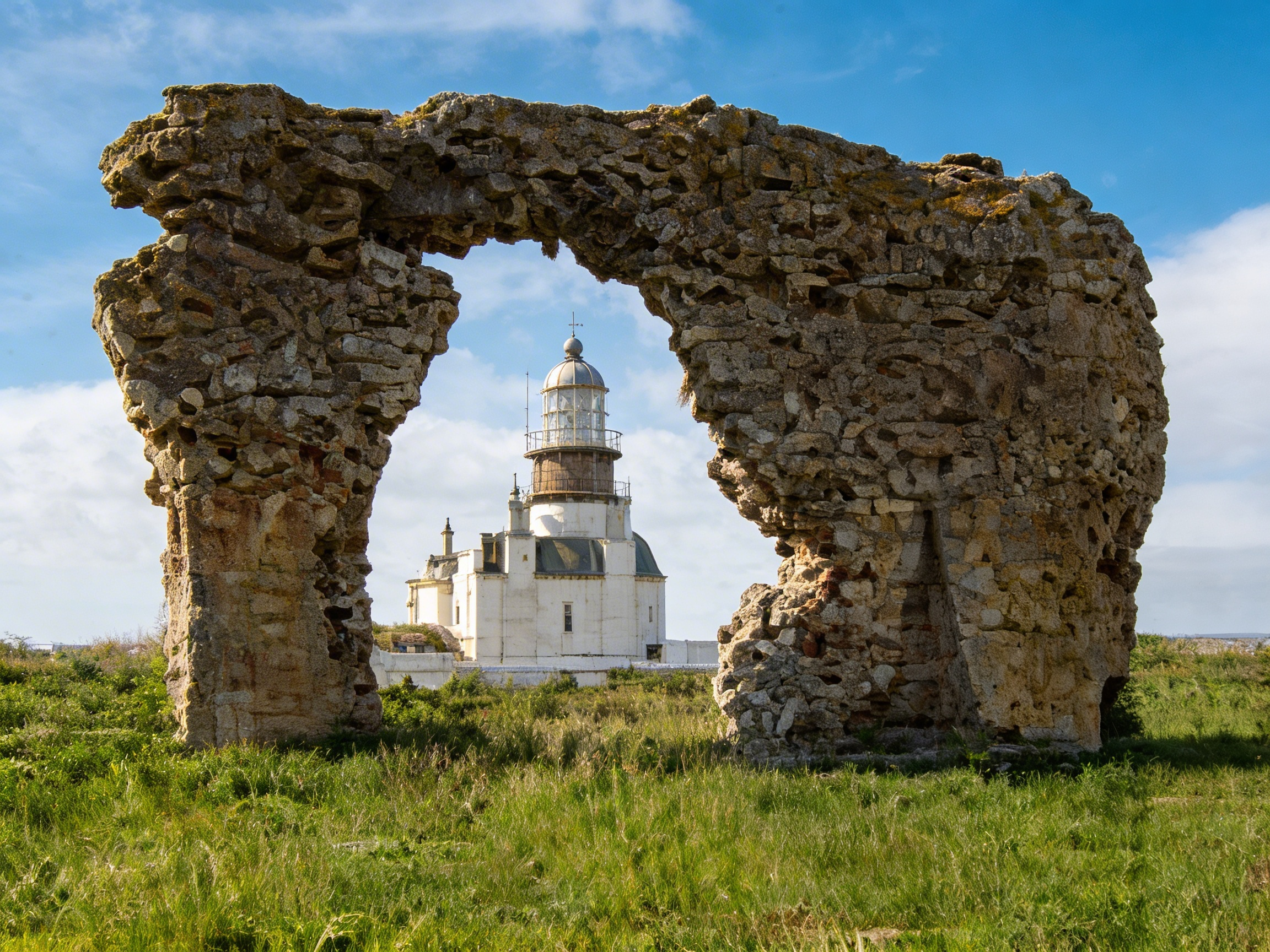
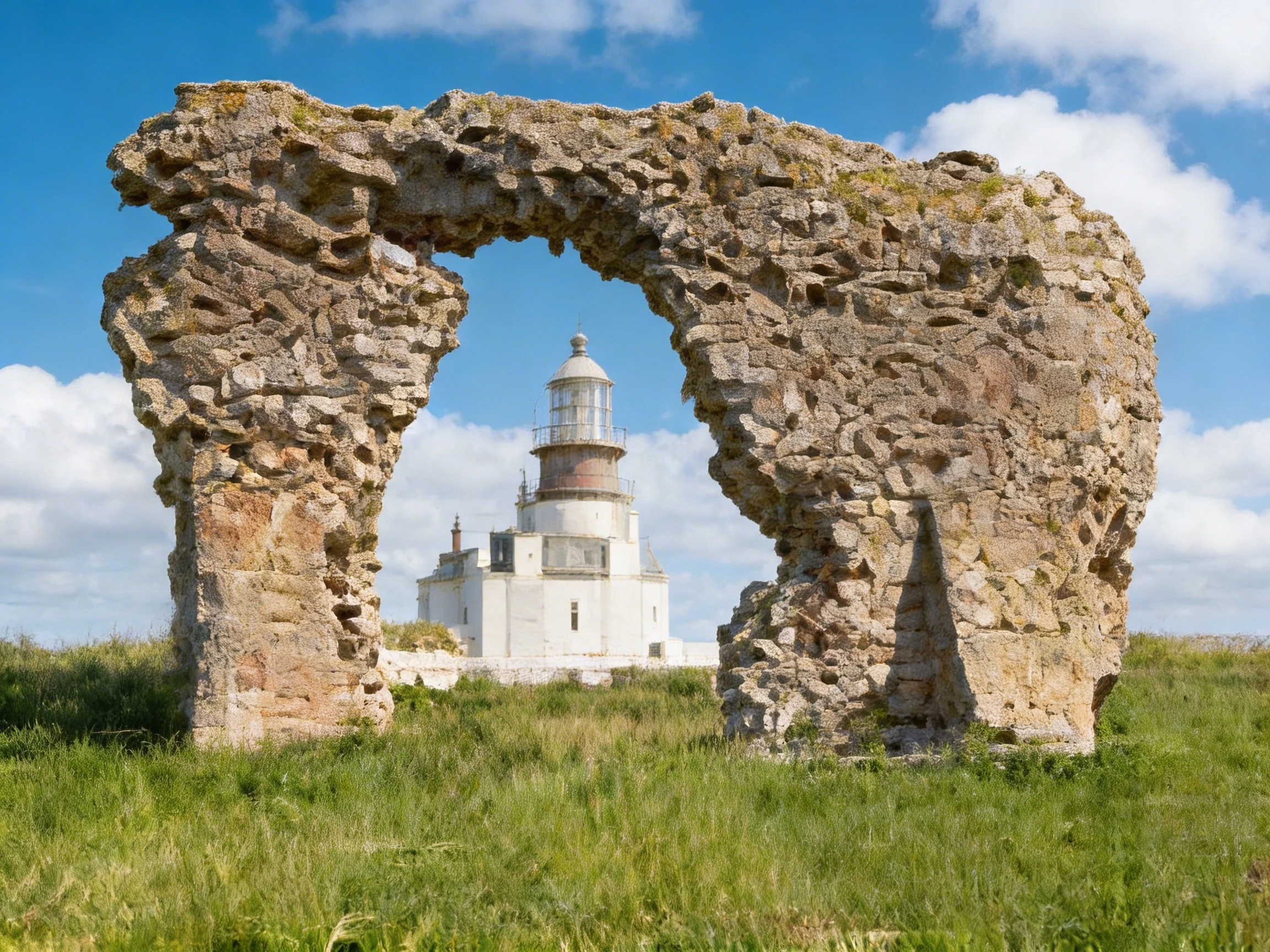
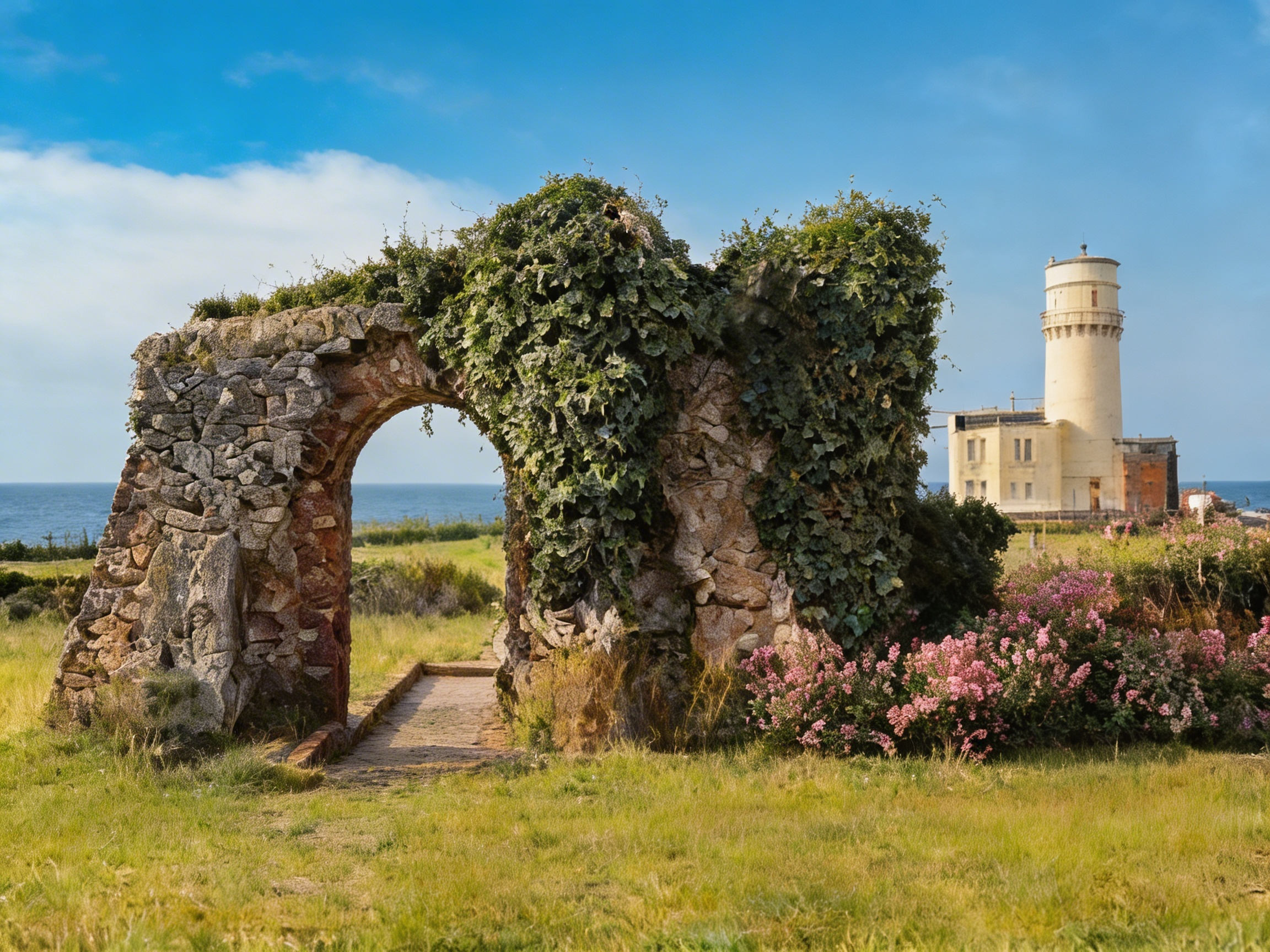
ST. EDMUND’S CHAPEL
CHANCEL RUIN, HUNSTANTON
GRADE II LISTED
The Chapel as a Subordinate of Hunstanton Church (of St. Mary)
1229 A.D.
Since c.1130’s the le Stranges of Hunstanton with their Shropshire fiefs, were important benefactors of Haughmond Abbey. Two hundred miles west of Hunstanton, was this Abbey, the base of authority over St. Edmund’s Chapel. As a subordinate of the Hunstanton Church of St. Mary it was controlled by the Abbey. St. Mary’s was given to Haughmond Abbey in 1172 and this advowson was confirmed by King Henry II when he visited Shrewsbury in 1176. There is no evidence that St. Edmund’s Chapel Ruin was built by then other than a small sign in the building style, but there is evidence that it was already built by 1229, of which a copy of an excerpt is shown below:
Thomas Blundeville, the bishop of Norwich, confirmed that the Vicar of Hunstanton Church among other things would have all the income from St Edmund’s Chapel, including all its offerings, as part of his support. This formed part of a wider agreement to ensure he was properly provided for and to prevent disputes with Haughmond Abbey. 31st May 1229[Chartulary of Haughmond, Una Rees,No.620].
[“The vicar is to have the altarage with the lesser tithes and obventions, except the tithes of the sea of which he shall have a tenth part. He shall have the buildings in Hunstanton cemetery and 10 a. of land, with Redmedewe, and St. Edmund’s chapel with its obventions” To all the faithful of Christ to whom this present writing shall come, Thomas, by the grace of God bishop of Norwich, sends greeting in the Lord.]
The building style on the other hand whereby Historian Blomefield noted that there was a window as well as a door on the north wall, the door being one indication of the church being an early norman build, if not, one cannot rule out that it was a renovation over a saxon build.
Firm family ties with Haughmond Abbey, Shropshire began with his Father, John le Strange I, a Canon & Knight. The Family were important benefactors of Haughmond Abbey since about 1130’s, and by 1229 it is evident that as major donors, the link with Hunstanton was more than a collaboration.
Church & Chapel was Haughmond Abbey, Shropshire held authority over St. Mary’s (then Rectory) to which St. Edmund’s Chapel belonged.
It is not currently known when the ruined Chapel was built, however it may go back to the Normans or beyond, however, it was in existence in 1229, during the reign of Henry III.
Edmund, was crowned on Christmas Day 855 aged 14, and died for his Christian faith on 20 November 869.
This East Anglian King became revered as a Martyr within a generation of his death at the hands of Vikings.
The story of his courage as a Christ-like King gained popularity, and it is quite likely that the Chapel welcomed pilgrims as part of a pilgrimage route ending at the main destination at Bury St. Edmund’s Abbey, where the Martyr’s new burial place became enshrined.
Over time, accounts of his death—particularly of the king bound and shot with arrows—became central to his identity as a saint. Legend and Pilgrimage was a major commercial enterprise in medieval England, offering souvenir badges to travellers who spent money on local food, lodging, and transport. This would be part of it’s role in the community of the medieval parish of Hunstanton, as well as preserving local traditions, feasts, and gatherings.
THE RUIN
The Chapel is known to have been ruinous by the early 1700’s, marked by a visit from Historian, Francis Blomefield:
“on the cliff, stands some remains.., built chiefly out of the cliff’s chalk-stone; it had 1 window and 1 door on the north side facing the sea, 1 door and 3 windows on the south side, and one window at the east end: it is now all open, great part of the walls, which were about five feet thick…”.
North: 1 window and 1 door
South: 1 Door, 3 Windows
East: 1 Window
West: 0
[Blomefield Vol.10, p.324]
As there is no door on the East wall and just a window, this suggests that the Chapel was East Facing, standard for a religious house.
He went on to say that it “seems to have been built about the reign of Edward I” which was ultimately a guess. This turned into fact!
Interestingly, many of it’s finds from 1913, according to Norfolk Heritage Explorer, date back to as early as 1066-1539AD, suggesting that the Normans may have built the Chapel.
EDMUND, FOUNDER OF OLD HUNSTANTON
Edmund is said to have founded the village of old Hunstanton, when he built a royal tower, residing there for nearly a year while completing the book of Psalms that he’d learnt in Saxon language. [Blomefield Vol.10, p.313]
Blomefield went on to say that Hunstanton’s nickname ‘Sunny Honey’ probably arose from Hunstanton park, home of the le Strange Family, where the Source of the River Hun and it’s spring water runs through like Honey.
About the Chapel of St. Edmund’s
The chapel of St. Edmund’s itself served a dual purpose. In addition to its religious function, it was used as a coastal beacon or lighthouse, guiding ships along a hazardous stretch of shoreline. Its position on the cliffs made it both visible from the sea and symbolically significant on land.
By
P
Taken together, these sites form a coherent historical and cultural landscape:
H
I
M
Bveneration.
F
Feast days of St Edmund:
Possibly used for Feast days of St Edmund and coastal gatherings.
20 November — main feast (martyrdom)
9 June — translation of relics
April (variable) — discovery of body
HE FEAST CHANT
“Hail, Edmund, King of the Angles,
Soldier of the King of Angels,
Flower of Martyrs,
Like the lily and the rose,
Send forth thy prayers to the Lord
For the protection of the faithful.”
[Pre-Reformation Christian Chant for St. Edmund]
By the 1700’s Historian, Francis Blomefield noted the clifftop chapel to be in ruinous state.
The old Chapel had a role within Hunstanton parish, however,
Historian, Francis Blomefield implied, the chapel was a chapel-of-ease. It was a ‘subordinate’ dof St Mary’s Church, Old Hunstanton., were likely occasional or seasonal services taken by the Rector of St. Mary’s Church, Old Hunstanton.
O
Land Inventory & Allocation 1240
This record sets out the lands assigned to the vicarage of Hunstanton, witnessed among others, by Hauhmond Abbey Priory reps. It was established that the vicar of Hunstanton, Godfrey and his successors—should hold eighteen acres of land, divided between better, middling, and poorer qualities. Among the best of these lands are five acres at Cliffe and seven roods within the croft associated with St. Edmund’s Chapel.
Chartulary of Haughmond Abbey by Una Rees p.130, Charter 620, 624
-
The Hall kitchen gardens with red and white roses which they grew reminiscent of the red and white cliffs and coat of arms colours.

-
A photo by kind permission of Julia K. Hill illustrates the unique sign post with the le Strange coat of arms and Lord High Admiral of the Wash with spear.
